When a home cleanup grows beyond a few trash bags, the next step is not always obvious. Homeowners may search for a large temporary container and encounter two names repeatedly: dump trailer and roll-off dumpster. Both hold unwanted material and leave the property on a truck, so they can appear to be different labels for the same basic service. In practice, they are different pieces of equipment with different effects on the project around them.
The distinction matters because most homeowners are not working on an open commercial construction site. They are working around a driveway that still needs to serve the family, neighbors who share a narrow street, landscaping that must remain intact, and people who will carry every piece by hand. A container that offers plenty of capacity can still be a poor choice if it is difficult to place, hard to load, or out of scale with the work.
This article begins with the basic differences between the two container styles, then asks the practical questions a homeowner needs to answer. Which is easier to load? How do they affect a driveway? Which one fits a residential neighborhood? How should capacity, rental time, labor, and responsible disposal influence the decision? The comparison is intended to help readers choose from an informed starting point rather than from container size alone.
Understanding the Two Container Styles
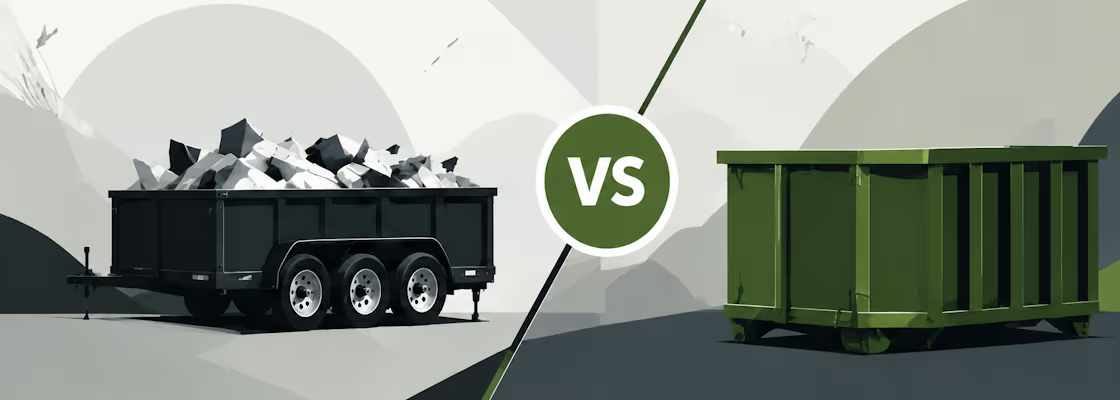
Homeowners often use the terms dump trailer and roll-off dumpster interchangeably, but the equipment reaches a property and behaves differently once it is there. A dump trailer is a wheeled container towed behind a truck. It is placed using its own tires and support system, then hauled away and hydraulically emptied. A roll-off dumpster is a large steel box carried on a specialized truck and rolled down rails onto the ground. Both can handle substantial debris, yet their dimensions, weight, delivery method, and loading height produce very different experiences on a residential site.
Neither format wins in every circumstance. Large commercial construction jobs may need the volume or heavy-material capability of a roll-off. For garage cleanouts, flooring replacement, landscaping, moving, estate work, and many household renovations, however, a dump trailer often matches the scale of the job with fewer compromises. The useful question is not which container is universally better, but which one fits the material, property, schedule, and people doing the loading.
Lower Loading Height Reduces Effort
Many dump trailers sit lower than conventional roll-off boxes and open from the rear. Instead of repeatedly lifting furniture, fence boards, flooring, and bags over a tall sidewall, loaders can carry or roll material through the doors. That difference becomes significant over dozens of trips. Lower lifts reduce fatigue and make it easier to place objects deliberately instead of throwing them, which allows better use of the available capacity and lowers the chance that debris will bounce back toward the person loading it.
Walk-in access is especially valuable for bulky items and renovation debris. A dolly can move a heavy cabinet or appliance closer to its final position, while long boards can be laid flat. The loader can distribute dense material across the floor rather than building one heavy pile near the wall. Safe technique is still essential, and some items are better handled by a professional crew, but a trailer’s accessible design makes typical do-it-yourself work more manageable.
A Residential-Scale Footprint
Roll-off dumpsters are designed around a truck that must tilt and slide a steel container into position. The delivery vehicle needs substantial straight-line clearance, and the box itself can dominate a short driveway. Dump trailers are generally easier to maneuver into residential spaces because they are backed into place like other towable equipment. In established Katy and West Houston neighborhoods, where parked cars, mature trees, gates, and curved streets limit access, that precision can determine whether a container can be placed close to the work at all.
The smaller visual profile can also be easier to manage under neighborhood rules. A trailer is less likely to block a driver’s view or extend into a sidewalk when correctly positioned. Homeowners should still check association restrictions, municipal requirements, and street-placement rules. The advantage is practical flexibility, not exemption from local standards. Photos of the driveway and approach can help GreenPath assess fit before delivery.
Driveway Protection and Surface Considerations
A roll-off container concentrates considerable weight along steel contact points as it moves on and off the truck. Protective boards may reduce direct contact, but there remains potential for scraping, rust marks, cracking, or stress on older concrete and asphalt. A dump trailer rests on tires and support points, giving the delivery operator more control over where the load touches the surface. Its residential-scale weight and placement method often make it a gentler choice for a sound driveway.
No container is risk-free. A fully loaded trailer can be extremely heavy, particularly when filled with concrete, soil, shingles, or tile. Weak pavement, cracked edges, pavers, steep grades, and underground structures require careful evaluation. The material type should always be disclosed in advance so capacity and placement can be planned. GreenPath can discuss surface protection and identify when a different solution is more responsible.
Capacity Should Match the Actual Project
Paying for the largest available box is not automatically economical. Residential debris tends to be bulky rather than uniformly dense, and thoughtful loading often fits more than a loose visual estimate suggests. Breaking down cabinets and boxes, laying flat material on the bottom, and filling gaps can make a dump trailer an efficient choice for a bathroom update, garage cleanout, fence replacement, yard project, or moving purge. Its capacity is substantial without consuming the space of an oversized commercial container.
Conversely, repeated loads can erase the savings if the project truly requires a much larger container. Estimate both volume and weight, and describe the job honestly when requesting a quote. A room full of furniture and the same apparent volume of broken concrete impose very different demands. GreenPath can help distinguish between a trailer rental, multiple hauls, and full-service junk removal so the service reflects the actual work rather than a guess based only on container dimensions.
Timing and Control for Do-It-Yourself Work
A trailer allows the household to load in stages. That flexibility is useful when demolition happens one room at a time, landscaping depends on weather, or family members are sorting an estate carefully. The container remains nearby while decisions are made, and the project does not have to be compressed into a short crew visit. Rental periods and extension terms should be confirmed in advance, but a locally managed trailer can offer responsive delivery and pickup when plans change.
Control also creates responsibility. The customer must keep prohibited material out, distribute weight correctly, prevent overfilling, secure the site, and complete the labor. Anyone with limited mobility, a tight deadline, stairs, or exceptionally heavy objects may get better value from full-service removal. The apparent lower price of self-loading is meaningful only when the household has the time and physical ability to do the work safely.
Responsible Handling After Pickup
Convenience at the driveway is only part of the disposal decision. Mixed loads can contain reusable furniture, recyclable metal, cardboard, yard material, and true waste. GreenPath Junk Removal’s mission is to reduce unnecessary landfill use by prioritizing donation and recycling whenever condition, local facilities, and material separation make those routes practical. Customers can support that effort by identifying reusable goods before demolition debris is mixed with them and by describing the load accurately.
A locally operated service also gives homeowners a direct point of contact for material questions and schedule changes. Instead of choosing equipment based on a generic size chart, customers can discuss access, debris type, loading time, and the desired level of labor. To evaluate a trailer for your project, visit GreenPath’s dump trailer rental service page. The right choice should protect the property, fit the work, and move unwanted material toward the most responsible available destination.
Dump trailers tend to serve homeowners well because they combine accessible loading, precise placement, useful capacity, and flexible timing in a residential-scale package. Those advantages are meaningful only when the material is suitable and the customer can load it safely. By evaluating access, weight, labor, duration, and total cost together, a homeowner can choose equipment that supports the project instead of becoming another obstacle. GreenPath can help make that comparison using the real conditions at the property.