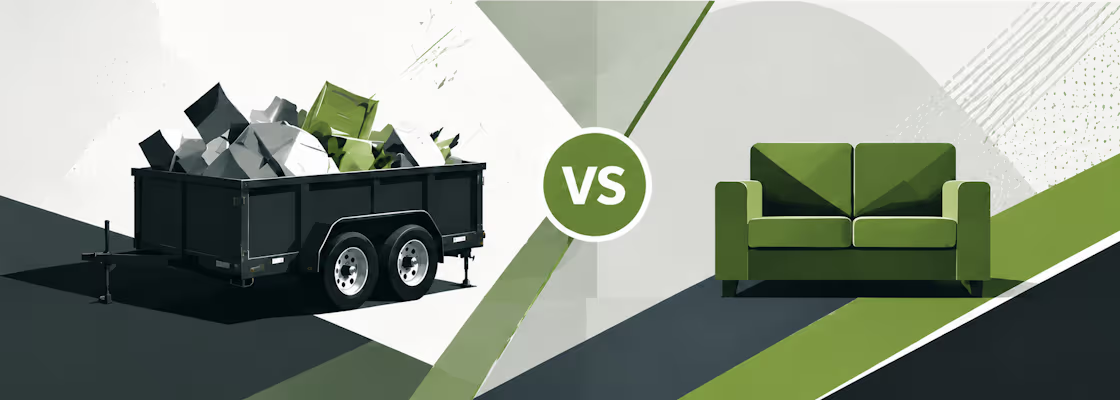
Reclaiming a cluttered space begins with a simple intention: the unwanted material needs to leave. The practical path from that intention to an empty room can take several forms. Some homeowners want a crew to arrive, carry everything out, and finish the job in one visit. Others are working through a renovation or cleanup over several days and need a container waiting nearby as new debris is produced.
Those two situations lead to two common services. A dump trailer rental gives the customer temporary container space and time to load it. Full-service junk removal provides the people who carry and load the approved items as well as the vehicle that takes them away. Neither service is merely a different size of the other. They divide the labor, schedule, and responsibility in fundamentally different ways.
This article introduces both choices for readers who may never have hired a hauler or rented a debris container. What work does the customer perform? Which option suits heavy furniture or stairs? When does a multi-day rental make sense? How do placement, cost, safety, and responsible disposal affect the answer? Exploring those questions will make it easier to choose a service based on the way the project will actually unfold.
Two Services Solve Different Parts of the Job
A dump trailer rental provides a container and transportation while the customer supplies the loading labor. Full-service junk removal adds a crew that carries, sorts, loads, and hauls approved items. Both approaches can clear the same garage or renovation, but they assign time, physical effort, and responsibility differently. Choosing well requires more than comparing the first quoted price.
Consider where the material sits, who can move it safely, how quickly the space must be cleared, and whether the debris will be generated all at once or over several days. Also evaluate property access, material weight, local restrictions, and the ability to keep a container secure. GreenPath Junk Removal offers both options because a single format does not fit every household or project.
Full-Service Removal Buys Labor and Speed
Full-service hauling is usually the stronger choice when unwanted items are inside the home, upstairs, scattered through multiple rooms, or too heavy for the customer. The crew arrives during a scheduled window, confirms the scope, removes approved objects, and takes the loaded vehicle away. The property does not host a container for several days, and the customer avoids repeated lifting.
This format works well for moves, estate cleanouts, rental turnovers, office clearances, bulky furniture, appliances, and urgent projects. It is also valuable when stairs, narrow doors, elevators, or long carries complicate access. Customers should disclose these conditions during estimating because demolition, disassembly, unusually heavy objects, or specialized handling can affect labor and price.
A Trailer Provides Time and Control
A trailer rental suits projects that produce debris gradually. During a bathroom remodel, fence replacement, landscaping job, or weekend cleanout, the container remains on site while work progresses. Customers can load as rooms are demolished or decisions are made rather than coordinating every object around one crew appointment. For capable do-it-yourself teams, supplying the labor may offer good value.
That control includes responsibilities. The renter must follow accepted-material and weight rules, distribute the load evenly, keep debris below the walls, secure the area, and finish within the rental period. Heavy concrete, soil, brick, shingles, and tile can reach weight limits before the trailer appears full. Hazardous or restricted material must stay out, and uncertain items should be discussed before loading.
Physical Ability Is a Real Cost Factor
Self-loading may look less expensive until the project requires several people, equipment, time away from work, or recovery from strain. Sofas, refrigerators, safes, hot tubs, and dense renovation debris can injure inexperienced movers or damage walls and floors. Heat and humidity in the Katy area add stress to long loading sessions. A realistic decision accounts for the condition and experience of everyone doing the work.
Trailer loading is most sensible when the team can lift safely, use dollies, wear suitable protection, and work without rushing. Full-service removal transfers much of that physical burden to an equipped crew. Customers still need to identify what leaves and provide safe access, but they do not have to turn a cleanup into a personal moving job.
Property Conditions May Decide the Question
A trailer needs a stable, level placement area and enough approach room for delivery and pickup. It should not block vehicles, sidewalks, hydrants, gates, or emergency access. Homeowners must consider driveway condition, low branches, overhead lines, underground systems, neighborhood rules, and street permits. Apartments and dense commercial sites may not have a lawful place to leave a container.
Full-service trucks also need parking, but they leave after the appointment and can sometimes work from a legal loading area that would not support a multi-day rental. Send GreenPath photos of the driveway, street, and access route. The team can help determine whether placement is practical or whether direct removal avoids a preventable property and neighborhood problem.
Compare Complete Cost, Not Just Container Price
A trailer quote should be evaluated with its rental period, included weight, excess-weight terms, delivery and pickup, prohibited materials, extension charges, and customer labor. A full-service quote should clarify volume, carrying conditions, labor, transportation, and disposal. Either scope can change if the load is larger or materially different from the description supplied during estimating.
For a small accessible pile, full-service removal may cost less than reserving an entire trailer. For a multi-day project with a capable crew, a rental may be more efficient than scheduling repeated pickups. Large, urgent, or labor-intensive jobs often favor full service even if the initial number is higher, because the price includes rapid completion and avoids the hidden cost of self-loading.
Some Projects Benefit From a Hybrid Approach
The choice need not always be exclusive. A renovation may use a trailer for ordinary debris while a crew removes heavy furniture before work begins. An estate project may use full service for interior contents, then reserve a trailer for slower garage sorting. Separating clean reusable goods from dirty construction waste can also improve the chance of donation or recycling.
GreenPath’s mission is to prioritize those responsible outlets where practical before residual waste goes to disposal. Accurate descriptions and source separation support that work regardless of service type. Compare GreenPath’s dump trailer rentals with full-service junk removal, then discuss the material, access, deadline, and available labor. The best option is the one that completes the entire project safely, predictably, and with a responsible plan for what leaves the property.
Make the Decision Before Work Starts
Walk the project and estimate when each material will be generated. Photograph the volume, identify the heaviest objects, measure narrow access, and ask everyone who would load a trailer whether they can genuinely commit the time. Then compare written scopes using the same inventory. A decision made before demolition or moving day preserves scheduling options and prevents debris from becoming an unsafe pile while the household searches for a last-minute solution.
If the answer is still unclear, describe the job rather than requesting a specific product. A local provider can recommend service based on the conditions instead of forcing the work into a predetermined container. That conversation should address accepted materials, labor, rental time, weight, placement, pickup, and destination handling, giving the customer a complete basis for choosing.
A dump trailer is usually strongest when capable customers need time and control, while full-service removal is strongest when speed, indoor carrying, or heavy labor defines the project. Neither option is cheaper or easier in every setting. The useful comparison includes all labor, rental terms, access constraints, weight, and disposal requirements. GreenPath can help shape that comparison around the property so the selected service is safe, predictable, and proportionate to the actual work.